

Chapter 1: The Neuroscience & Philosophy of Off-Grid Solitude
In an era defined by continuous digital connectivity, hyper-targeted notification loops, and chronic sensory overstimulation, voluntary wilderness solitude is not a luxury or a passing lifestyle trend — it is a structural neurobiological necessity for human health.
Pioneering research by developmental psychologist Dr. Ester Buchholz demonstrates that intentional alonetime in natural environments produces a profound shift in brain chemistry. While involuntary isolation (loneliness) triggers amygdala threat-responses and spikes cortisol, voluntary wilderness solitude deactivates stress pathways and maximally engages the brain's Default Mode Network (DMN).
The 72-Hour Neurological Shift
Peer-reviewed cognitive studies from the University of Utah reveal that 3 consecutive days (72 hours) of uninterrupted wilderness immersion without digital screen exposure yields dramatic neurological changes:
- 50% Increase in Creative Problem-Solving: Standardized Remote Associates Test scores surge after 72 hours of screen-free nature exposure.
- 23% Baseline Cortisol Reduction: Salivary cortisol levels return to healthy baseline levels as acoustic nature sounds quiet the sympathetic nervous system.
- Sleep Architecture Normalization: Natural daylight cycles entrain melatonin production, deepening Stage 3 slow-wave sleep and REM recovery.
Solitude is where emotional consolidation occurs. When external input stops, the brain processes unresolved stress, restores intrinsic motivation, and resets focus for months to come.
Chapter 2: Pre-Expedition Risk Assessment & Route Planning
Backcountry self-reliance is built on methodical pre-trip preparation. Going off-grid without structured risk planning transforms an empowering solitude retreat into an unnecessary search-and-rescue emergency.
The 5-Point Pre-Expedition Protocol
Before leaving cell coverage, Val and Chip execute this mandatory 5-point checklist:
1. Primary & Secondary Escape Route Mapping: Identify at least two secondary exit trails or gravel logging roads in case the main trailhead is blocked by rockslides, fire, or high water.
2. Offline Digital Vector Sync: Cache high-resolution vector terrain layers into Mindful Mapper and offline GPS apps before leaving home.
3. Physical Paper Backups: Always carry 1:24,000 scale USGS topographic paper maps sealed in a waterproof sleeve alongside a magnetic sighting compass.
4. Emergency Contact Pre-Brief: Share your exact trailhead GPS coordinates, vehicle license plate, planned return date/time, and satellite check-in window with one trusted contact.
5. Micro-Climate Weather Check: Inspect mountain ridge forecasts rather than nearest town weather — high-altitude temperature drops and wind shifts can be severe.
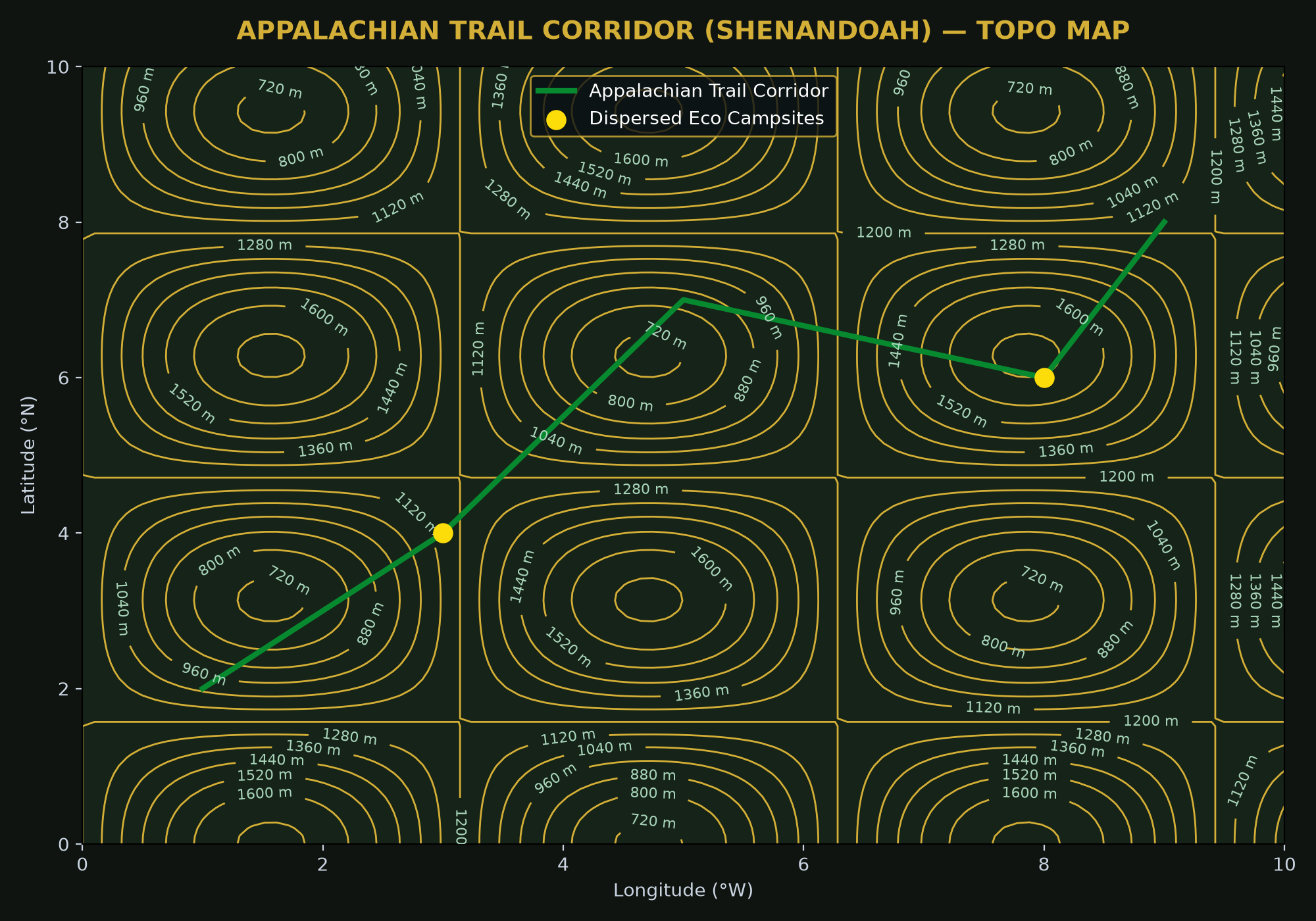
Bonus Map Pack #1: Appalachian Trail Corridor Topo (.PNG)
High-resolution offline PNG topographical map image with elevation contours, trail routes & dispersed campsite markers (Opens on all PCs & Mobile).
Chapter 3: Dispersed Camping Legality & Finding Coordinates
Dispersed camping on Public Lands managed by the Bureau of Land Management (BLM) and US Forest Service (USFS) offers legal, free access to tens of millions of acres of wild terrain. However, navigating land use boundaries requires understanding legal regulations.
Core Dispersed Camping Rules
- The 200-Foot Rule: Camp and pitch tents at least 200 feet (75 paces) away from all lakes, rivers, streams, and established trailheads to protect riparian zones.
- Motor Vehicle Use Maps (MVUM): Always consult local ranger district MVUM maps to confirm which forest service roads permit roadside dispersed vehicle camping.
- 14-Day Stay Limits: Dispersed camping is restricted to 14 days within any 28-day period in a single ranger district before you must relocate at least 25 miles away.
- Established Impact Clearings: Pitch camp on durable bare dirt or rock clearings with existing fire rings rather than trampling virgin alpine meadows.
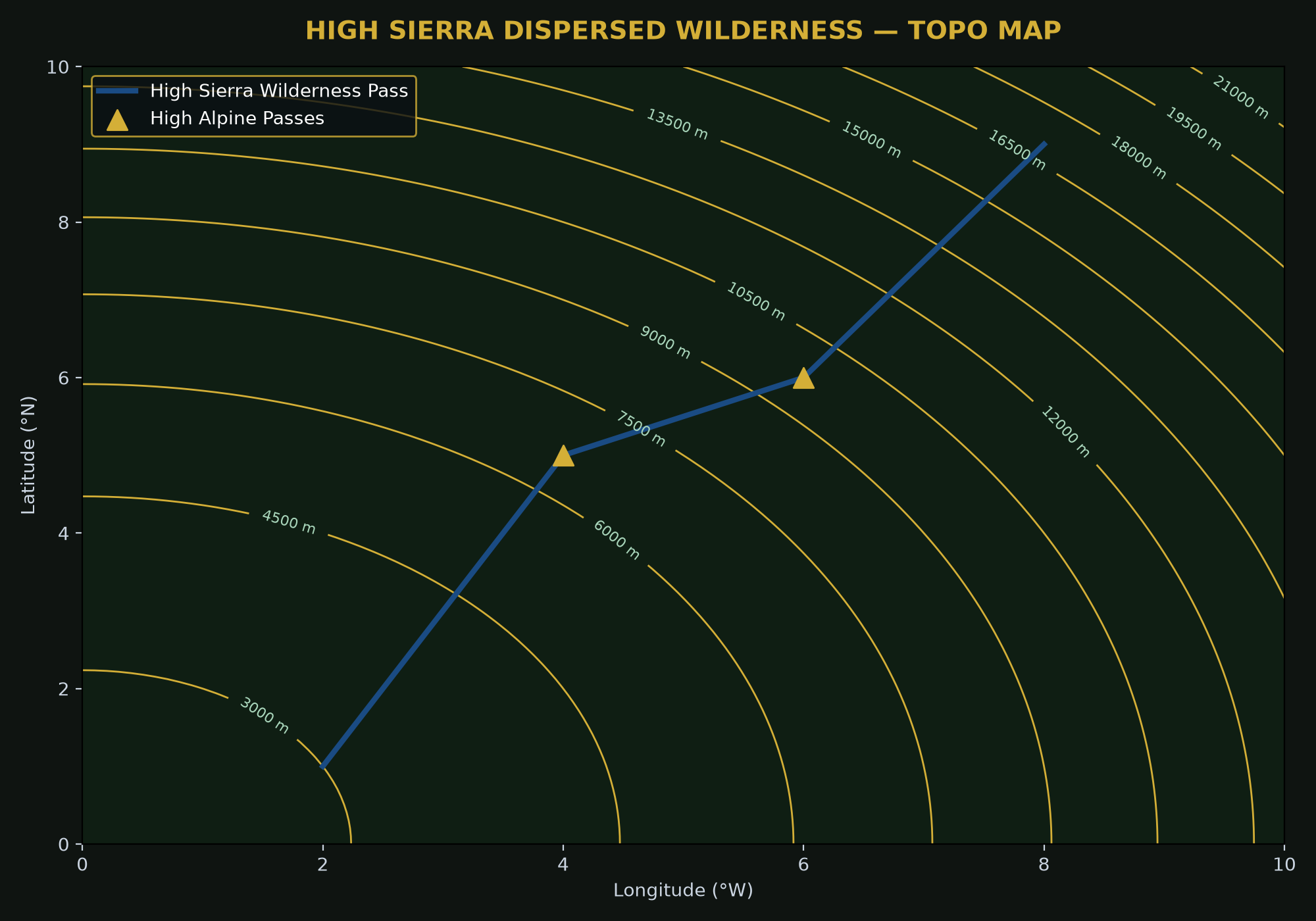
Bonus Map Pack #2: High Sierra Dispersed Wilderness Topo (.PNG)
High-resolution offline PNG topographical map image with high-alpine passes & eco campsite coordinates (Opens on all PCs & Mobile).
Chapter 4: Solar Energy Math & Off-Grid Power Sizing
Power independence is what enables comfortable extended solitude without battery drain anxiety. Calculating your exact daily energy load in Watt-Hours (Wh) ensures your solar setup matches your backcountry needs.
The Off-Grid Energy Calculation Formula
Daily Watt-Hour Load = ∑ (Device Watts × Daily Usage Hours)
                    Phone/GPS (15W x 2h) = 30 Wh

                    Headlamp/Lanterns (10W x 3h) = 30 Wh

                    Satellite Messenger (5W x 2h) = 10 Wh

                    Laptop/Camera (60W x 2h) = 120 Wh

                    ---------------------------------------

                    Total Daily Energy Budget = 190 Watt-Hours
To recharge a 190Wh daily load in 2.5 hours of solar peak window, you require a minimum 100W–200W solar harvesting panel.
🌿 Upgrade Your Gear to be More Sustainable: Silent Solar Power
Instead of noisy gas generators that disturb wildlife and wilderness silence, we rely on the Outbound Power 220W Bifacial Solar Kit. A single 2.8-hour charge during solar noon completely tops off a 500Wh basecamp battery with zero emissions, zero fuel, and zero engine noise.
Chapter 5: Backcountry Emergency Comms & Fire Tools
Deep mountain canyons and dense forest canopies obscure satellite and cellular signals. Carrying redundant emergency tools guarantees you can signal for help or ignite warmth during sudden weather shifts.
Satellite Check-In Cadence
Set a strict, non-negotiable check-in time (e.g. 08:00 and 20:00 daily) with your emergency contact via satellite messenger. If a scheduled check-in is missed by more than 4 hours without prior notice, your pre-briefed contact triggers emergency search protocols.
🎒 Val's Backcountry Packing Essential: Waterproof Ignition & Shovel
In our daypacks, we carry the Lightning X Waterproof Rechargeable Plasma Lighter alongside our Ultimate X23 23-in-1 Multifunction Shovel. Windproof dual plasma arcs ignite tinder instantly in 40mph gales, while the X23 handles trail clearing, cat-hole digging, and emergency shelter trenching.
Chapter 6: Clean Water Harvesting & Trail Sanitation
Waterborne pathogens like Giardia lamblia and Cryptosporidium can ruin a backcountry expedition. Harvesting and purifying water safely requires a multi-stage filtration strategy.
Water Purification Standards
- Gravity Ceramic Filtration: 0.1-micron ceramic filters remove 99.9999% of bacteria and protozoa without hand-pumping fatigue.
- Turbidity Pre-Filtering: Use a clean bandana or mesh pre-filter when collecting water from silty mountain rivers to prevent clogging your main filter.
- Graywater LNT Rules: Wash dishes and body at least 200 feet from natural water sources using biodegradable, fragrance-free soap. Strain solid food scraps into your trash bag.
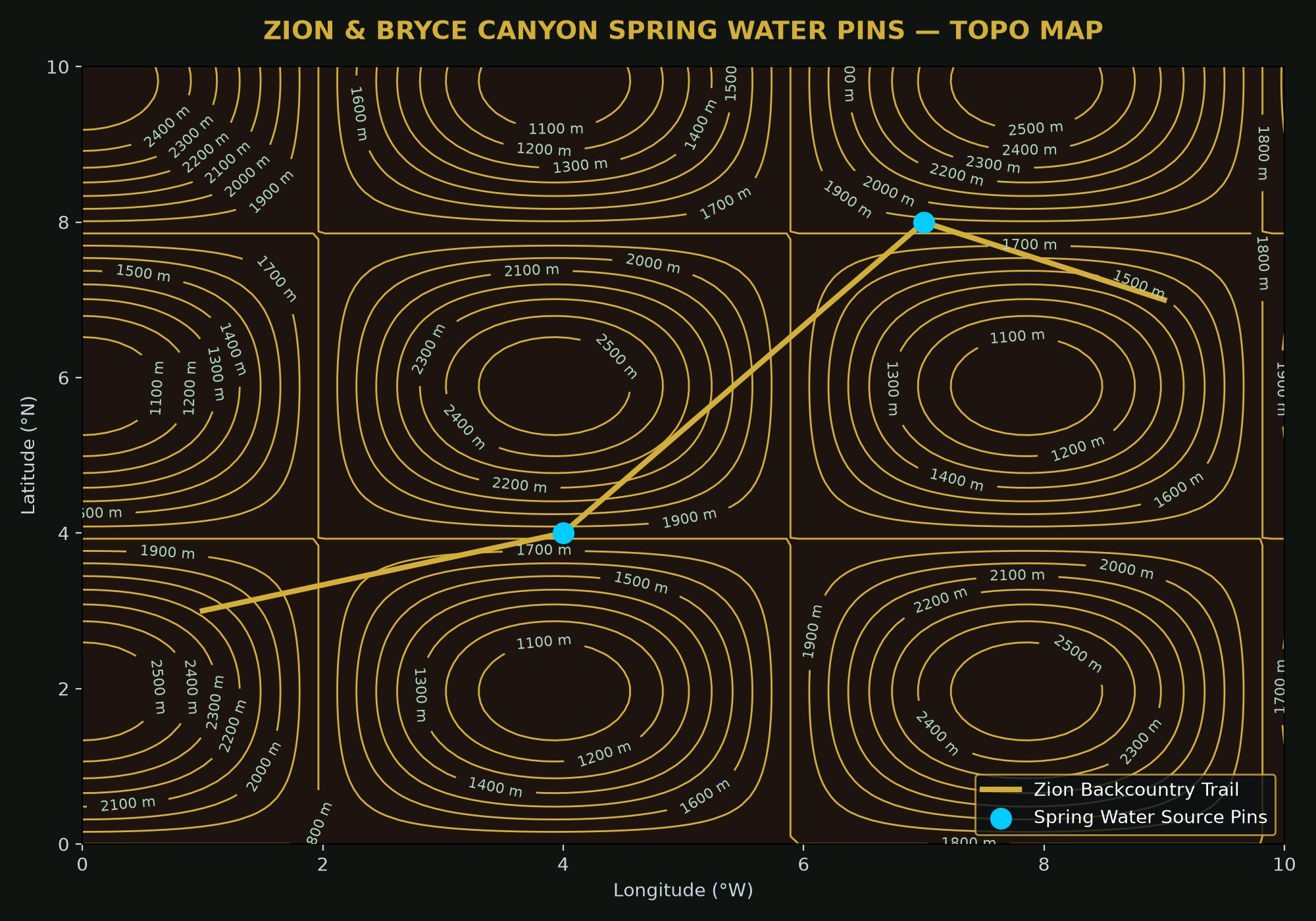
Bonus Map Pack #3: Zion & Bryce Canyon Spring Water Topo (.PNG)
High-resolution offline PNG topographical map image with spring water pin coordinates & backcountry routes (Opens on all PCs & Mobile).

Chapter 7: Bio-Friendly BIFL Gear & PFAS-Free Swaps
Synthetic outdoor gear often relies on toxic Per- and Polyfluoroalkyl Substances (PFAS) for waterproof DWR coatings. Over time, these "forever chemicals" rub off into pristine mountain watersheds and absorb through skin.
🌿 Sustainable Gear Swaps for the Trail
- Bio-Wax Waterproofing: Waterproof hemp canvas bags with Glenmal Organic Beeswax Kits instead of chemical DWR sprays.
- Zero-Plastic Cutlery: Pack Greenzla Bamboo Utensil Sets — ultra-lightweight, antibacterial, and 100% biodegradable.
- Fluorocarbon-Free Insulation: Sleep warm with Sportsman's Warehouse 20° Recycled Down Sleeping Bags.
- Merino Temperature Control: Layer up with Smartwool 100% Merino Base Layers for natural odor protection without microplastics.
- Organic Campfire Wear: Bundle up in our Pathfinder Compass Organic Heavyweight Hoodie.
Chapter 8: Wildlife Coexistence & Safety Distance Minimums
Coexisting safely with wilderness wildlife requires understanding animal behavior and respecting distance boundaries. You are a guest in their habitat.
Safety Distance Minimums
- Apex Predators (Bears, Cougars, Wolves): Maintain at least 100 yards (300 feet) distance at all times. Carry bear spray on your hip harness, not inside your pack.
- Ungulates (Bison, Elk, Moose, Deer): Maintain at least 25 yards (75 feet) distance. If an animal changes its behavior because of your presence, you are too close.
- PCT Bear Hang Method: Suspend food and scented items at least 12 feet above the ground and 6 feet out from the tree trunk, positioned 100 yards downwind from your tent.
Chapter 9: The 72-Hour Digital Detox & Solitude Protocol
Navigating the psychological stages of a digital detox requires intentional mindfulness during your 3-day wilderness reset.
The 3-Day Detox Timeline
Day 1 (Hours 0–24) — Phantom Notification Withdrawal: Expect involuntary urges to check your phone every 10-15 minutes. Acknowledge the urge without judgment and redirect focus to field journaling or fire prep.
Day 2 (Hours 24–48) — Nervous System Decompression: Mental chatter subsides. Sensory awareness sharpens — acoustic nature sounds become vivid, and sleep depth increases dramatically.
Day 3 (Hours 48–72) — Creative Flow & DMN Clarity: The Default Mode Network achieves peak activation. Breakthrough insights, restored emotional clarity, and deep peace take root.
Chapter 10: Leave No Trace Mastery & Returning Transformed
True Leave No Trace (LNT) mastery means leaving campsites cleaner than you found them, preserving wild places for generations to come.
The Final Campsite Double-Sweep
Before packing your rig or daypack, execute a slow grid walk across your entire campsite. Look for micro-trash, foil corners, fruit peels, or dropped gear. Scatter unused firewood naturally and restore fire rings.
Carry the stillness of the backcountry back into your daily life — and launch your 14-day free trial of Mindful Mapper Tool to plan your next eco-expedition!
⚖️ Disclosure & AI Transparency: Wanderlust Whisperz content is researched and authored by Val and Chip with AI assistance from Wilder. Some links in this guide are affiliate links (including Outbound Power ?aff=198, Sportsman's Warehouse, and Amazon). We receive a small commission at no additional cost to you, which directly funds our eco-travel guides and trail cleanup initiatives.