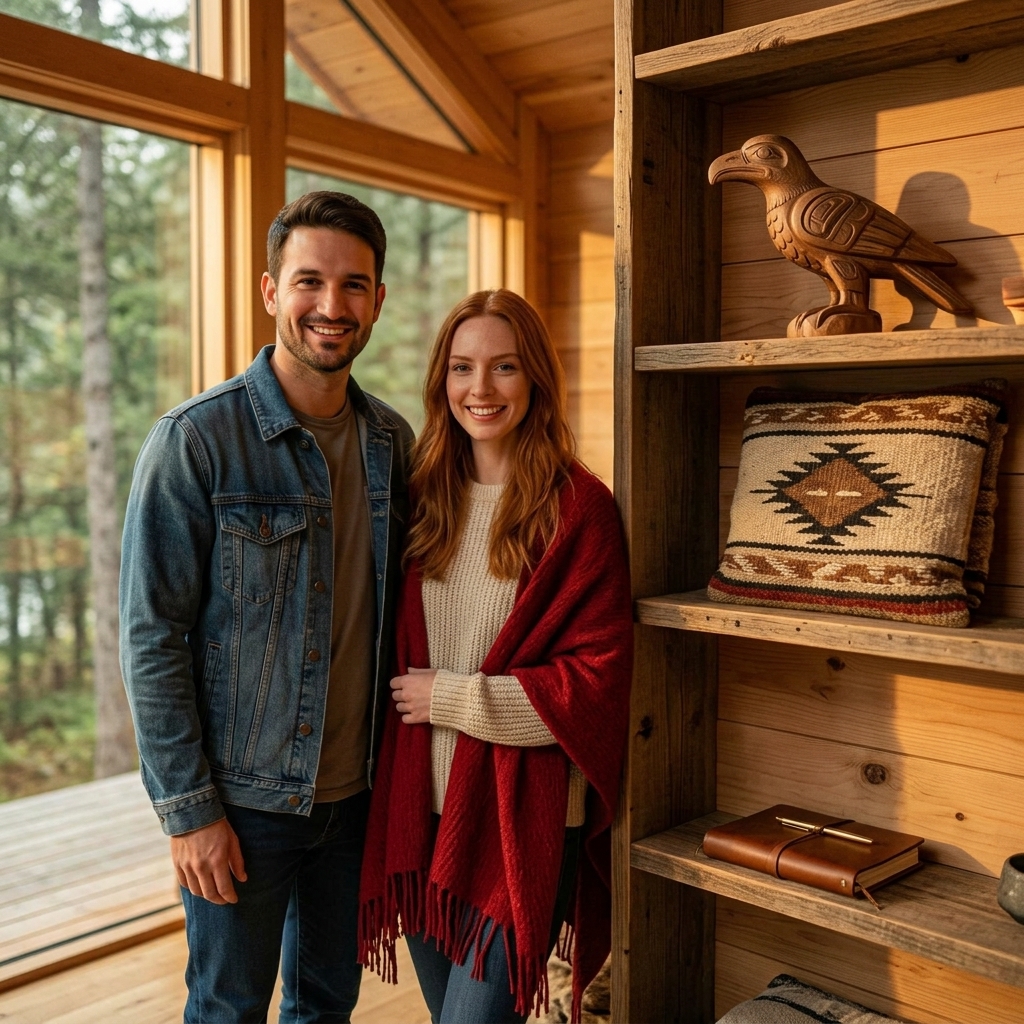
The "Shelf-ie" Era: Why True Explorers Leave Cheap Trinkets Behind
A true Mindful Mapper's home isn't cluttered with mass-produced plastic magnets. It is curated with deep intention, rich stories, and profound respect for the Earth.
The Shifting Identity of the Modern Explorer
Look around your living space right now. Does it actually reflect the identity of a conscious, slow-traveling explorer? For decades, the global travel industry conditioned tourists to purchase fast, cheap, imported plastic trinkets as proof of their journeys. We bought the $2 poorly-painted magnet. We brought home the poorly-stitched t-shirt that shrank after one wash.
But a tectonic shift has occurred. In 2026, regenerative travel isn't just a buzzword; it's the absolute baseline standard of the modern adventurer. Over 84% of modern travelers now consider the ecological and cultural impact of their trips to be their highest priority. They know that wandering the globe shouldn't mean leaving a trail of plastic and exploitation in their wake.
True explorers know that their identity isn't defined by how many passport stamps they can farm or how many cheap trinkets they can stuff into an overhead bin. It is defined by the fragile trails they preserve and the local artisans they actively support.
The Extractive Era is Dying
Every time a traveler purchases a mass-produced, imported trinket from a tourist trap, they are actively participating in what the industry calls economic leakage. The money leaves the host community almost instantly, funneling back into international conglomerates and overseas shipping industries. The host community absorbs the carbon footprint of the shipping, the localized waste of the packaging, and reaps almost zero economic benefit.
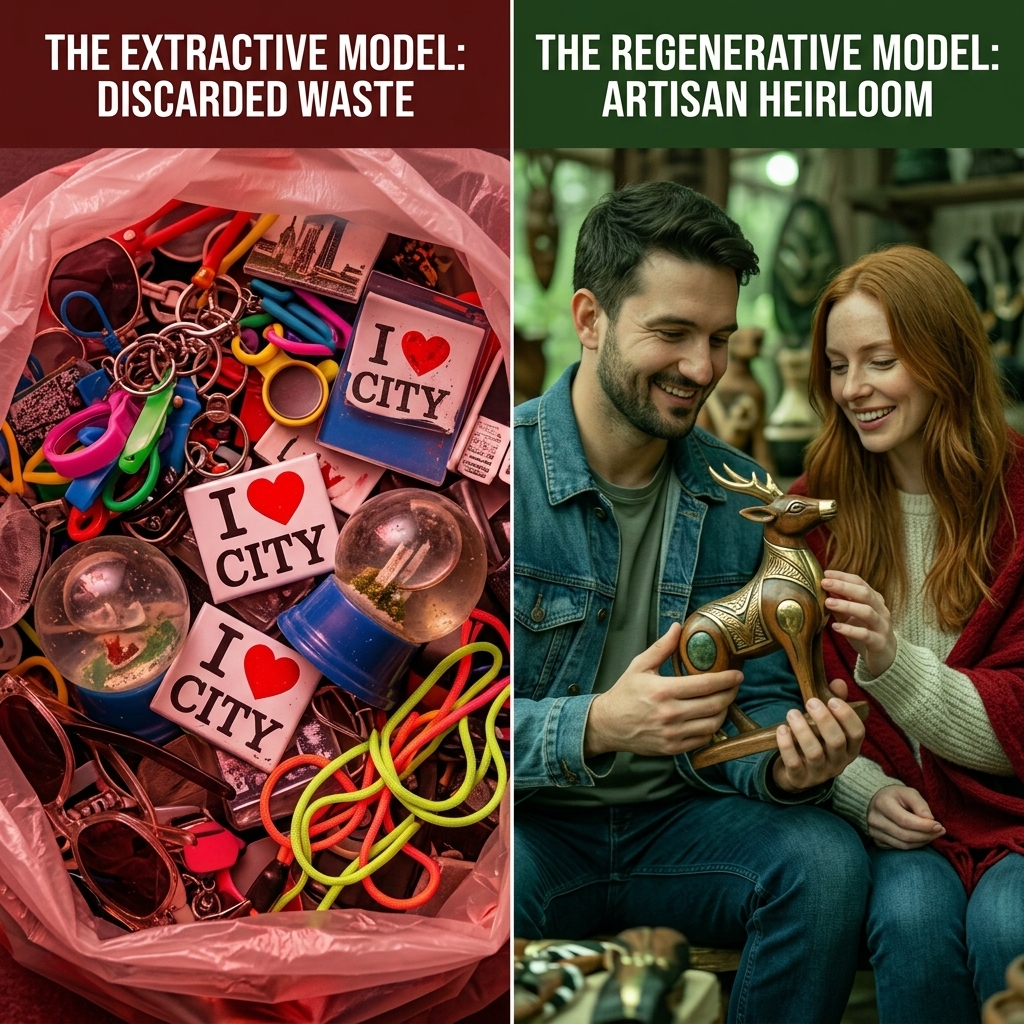
The physical evidence of a tourist vs. a Mindful Mapper.
When examined closely, the cheap souvenir actually acts as a slow-motion environmental hazard. Most of these items are fabricated using complex polymers and heavy metals, shipped across the Pacific, unboxed in a coastal tourist town, purchased for a fraction of their environmental cost, and ultimately sent to a landfill within 2 to 5 years.
The Rise of the Curated 'Shelf-ie'
Enter the "Shelf-ie"—a beautifully curated, minimalist space in your home dedicated to authentic mementos. It isn't just an aesthetic choice designed for Pinterest; it is fundamentally an economic and ecological rebellion.
The Shelf-ie rejects the "more is more" philosophy. Instead of returning from a two-week excursion with a bag full of novelties, the mindful traveler returns with exactly one item. A hand-carved wooden bowl sourced precisely from the maker. A masterfully woven textile dyed with local flora. A piece of pottery shaped from the very clay of the region.
The Mathematics of Authentic Sourcing
| Metric | Mass-Produced Trinkets | Artisanal "Shelf-ie" Goods |
|---|---|---|
| Carbon Footprint | High (Trans-oceanic shipping) | Near-Zero (Crafted locally) |
| Economic Retention | < 10% stays in host country | 100% direct to the maker |
| Lifespan Lifecycle | 2-5 Years (Landfill destination) | Generational (Heirloom quality) |
Source: Wanderlust Whisperz Eco-Gear Lifecycle Index 2026
The Local Economic Multiplier Effect
When you purchase an item directly from the hands that made it, you are triggering a localized economic multiplier. That $50 or $100 isn't just profit—it translates instantly into groceries for a local family, tuition for a community school, and capital to buy more local raw materials.
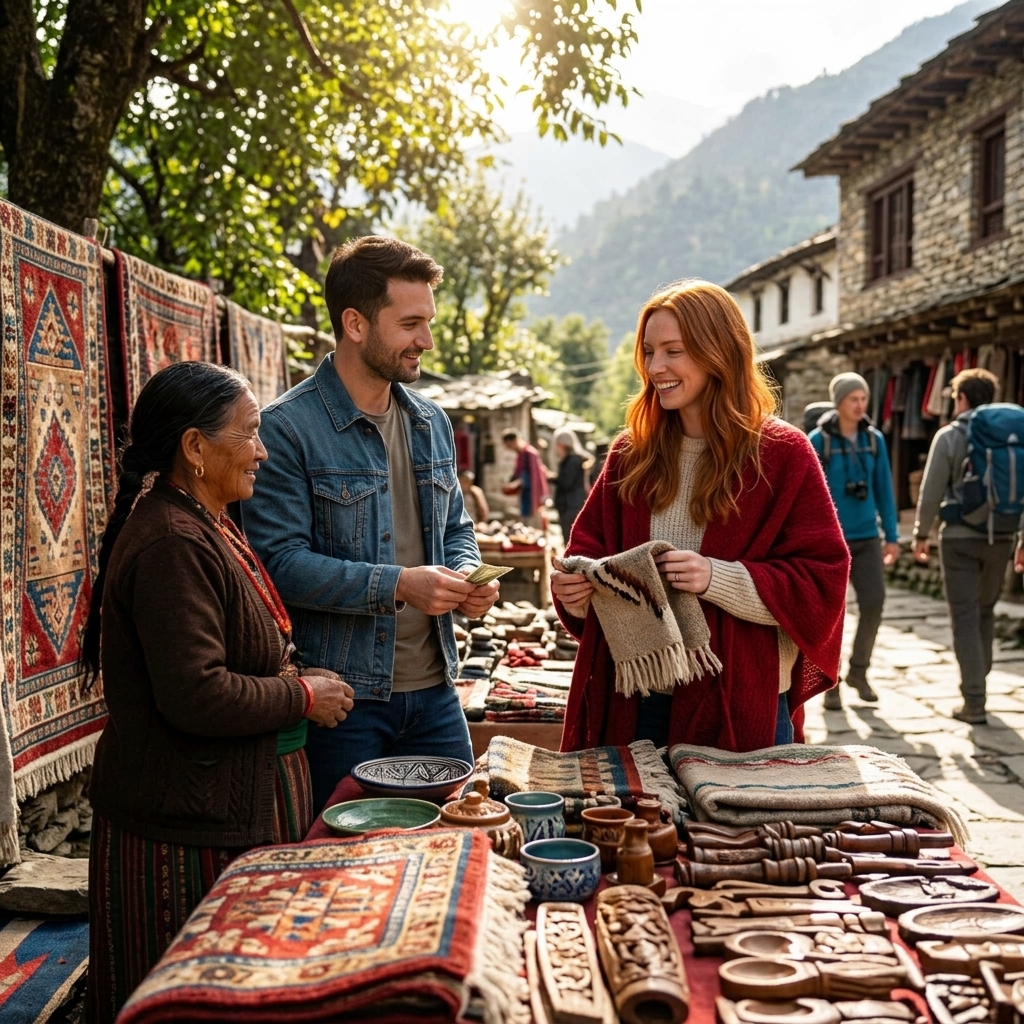
This is the purest form of travel. It forces you off the beaten path. You won't find authentic, heirloom-quality artifacts in the airport terminal or the air-conditioned mega-plaza next to the cruise ship port. To find the real makers, you must dive into the secondary cities, the mountain villages, and the deep rural collectives.
Off-grid exploration requires a strategic approach. When you stray from the tourist centers to find authentic artisans, you lose access to ubiquitous power grids and instant conveniences. This is why our team considers reliable, renewable power an absolute necessity for the mindful traveler. Carrying an off-grid lifeline like the SOS Solar Phone Charger isn't just about convenience—it ensures you have the navigation, translation, and communication tools you need when venturing into remote artisanal communities, entirely powered by the sun. It's the ultimate 'Leave No Trace' packing essential.
Curating Your Legacy
A souvenir should be exactly what the French origin of the word intends: "to remember."
You want to remember the smell of the market, the intricate skill of the artisan's hands, and the rough texture of indigenous wood. You don't want to remember a barcode scan at a mega-store.
Curating a legendary Shelf-ie takes discipline. You have to learn to walk past a hundred easy, cheap purchases to wait for the one item that actually resonates with your soul. But when you finally place that handcrafted totem on your shelf back home, it won't just be an object. It will be an anchor to a memory, a story worth telling, and a quiet testament that your journey actively regenerated the Earth rather than extracting from it.
Bridge to the Basecamp
Ready to start curating your own conscious adventures? Take the pledge to buy local-only on your next trip. To help you offset the cost of investing in heavier, high-quality authentic gear, we're doing something special this week.
The Mapper Coin Earth Day Promo
Sign up today for our latest deep-dive blog posts, podcast episodes, and eco-gear drops! For our first 100 sign-ups, we're dropping 50 free Mapper Coins directly into your account. Mapper Coins are our exclusive rewards currency that can be redeemed for sustainable basecamp gear and authentic eco-merch in our gift shop.
CLAIM YOUR 50 MAPPER COINS NOW